
Queen of Egypt: History, Power, and Royal Legacy
 By Axel Donovan
The Queen of Egypt has remained an object of interest to both historians and travelers as a symbol of power, beauty, and political strength in ancient times. From early dynastic periods to the reign of leaders such as Cleopatra, these queens have influenced both Egyptian history and the wider ancient world. Today, visiting the legacy of ancient royalty is more convenient than ever before as tourists are able to visit their tombs and monuments by applying for an Egypt e-Visa and making the journey to the ancient monarchs both convenient and memorable.
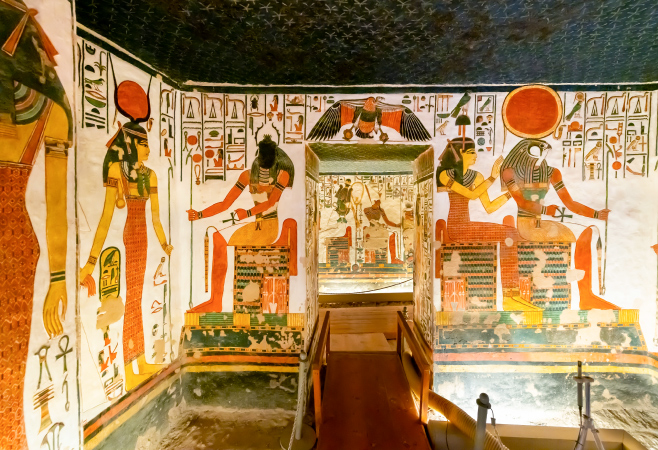
An overview of royal women in ancient Egypt
What does "Queen of Egypt" mean?
The term ‘Queen of Egypt’ refers to women who held royal power in ancient Egyptian civilization. This may refer to a queen consort, a wife of a pharaoh who was reigning or it may refer to a pharaoh who ruled as pharaoh in her own right. After all, women were permitted to exercise religious, political and economic power, which was uncommon in most ancient societies. Some queens served as regents, while others ruled as kings, adopting full pharaonic titles and symbols of authority.
List of Famous Queens of Egypt
Ancient Egypt was home to several influential queens whose leadership, diplomacy, and cultural impact shaped the course of history.
Queen Cleopatra
- Full name: Cleopatra VII Philopator
- Reign: 51–30 BCE
- Dynasty: Ptolemaic Dynasty
Queen Cleopatra was the most active ruler and the most renowned Queen of Egypt of all time. She was highly educated and multilingual who spoke Egyptian, Greek and other various languages which enabled her to govern a diverse population effectively. She formed strategic alliances with Roman leaders Julius Caesar and later Mark Antony in an effort to preserve Egypt’s political autonomy amid increasing Roman influence.
She was known for her political intelligence and economic reforms, which strengthened Egypt’s treasury and trade. However, contrary to the famous myths, Cleopatra gained power through politics and not just because of her beauty. She was defeated by Octavian, and afterward died in 30 BCE. Her death in 30 BCE marked the end of the Ptolemaic dynasty and Egypt’s transition into a Roman province.
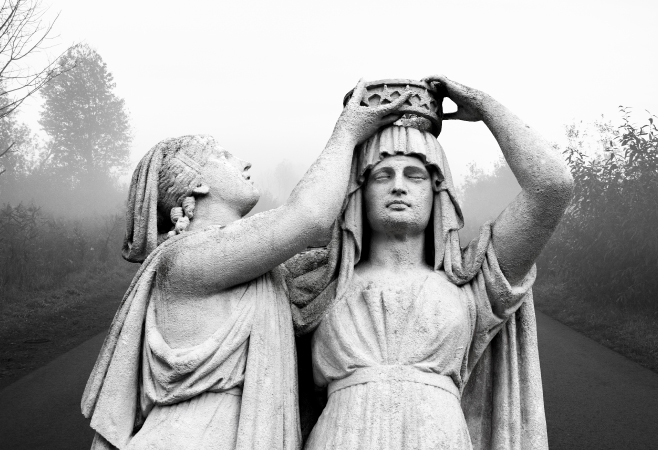
Queen Cleopatra
Queen Hatshepsut
- Reign: c. 1479–1458 BCE
- Dynasty: 18th Dynasty
- Role: Female Pharaoh
Queen Hatshepsut was among the most effective leaders in ancient Egypt and a unique woman to rule as pharaoh. She assumed full royal authority, adopted male pharaonic regalia, and took on traditional kingly titles to legitimize her rule. She was a rather peaceful and economically successful ruler.
Hatshepsut broadened the trade routes and the most famous one was the one which she organized to the Land of Punt where wealth and exotic items were introduced in Egypt. She also ordered some amazing architectural works such as her mortuary temple in Deir el-Bahari, a work of great architecture of the ancient style. Her rule was not in line with the conventional gender roles and demonstrated that a Queen of Egypt could be strong, stable, and visionary in her rule.
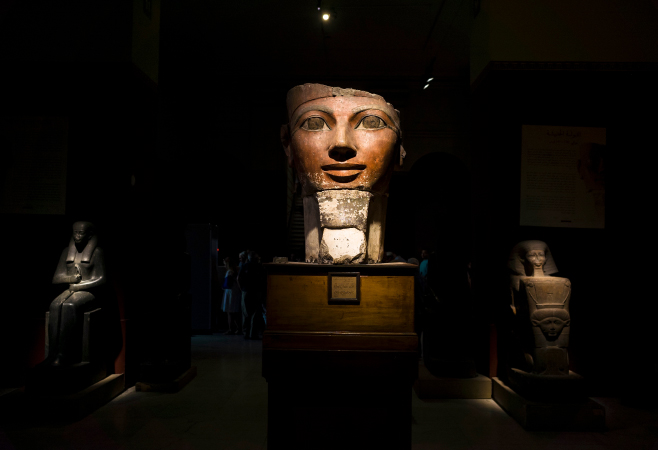
Queen Hatshepsut
Queen Nefertiti
- Period: c. 14th century BCE
- Dynasty: 18th Dynasty
- Role: Great Royal Wife
Queen Nefertiti was the powerful wife of the Akhenaten pharaoh and one of the strongest royal women of ancient Egypt. She was at the center of religious reformation that encouraged the veneration of the sun deity called Aten. Art and inscriptions tend to show her undertaking royal and religious roles, implying extraordinary power on a queen consort.
Some scholars suggest that Nefertiti may have served as a co-regent or possibly ruled briefly as pharaoh, although this remains a subject of academic debate. Her memory lives on in the form of the Nefertiti Bust as a symbol of beauty, grace and strength. Nefertiti is one of the most important actors to be mentioned in the context of the political and cultural impact of a Queen of Egypt.
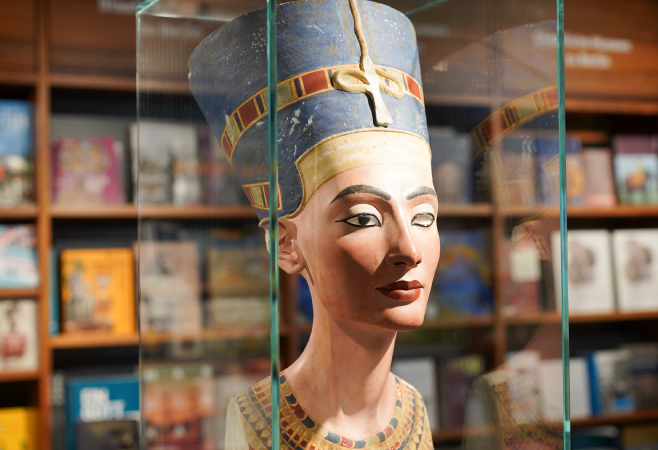
Queen Nefertiti
To further explore Egypt’s royal heritage, visitors can discover the remarkable architecture and history of the Edfu and Kom Ombo temples.
Queen Sobekneferu
- Reign: c. 1806–1802 BCE
- Dynasty: 12th Dynasty
- Distinction: First confirmed female pharaoh
Queen Sobekneferu is the first known woman pharaoh to have ruled Egypt. She ascended the throne around 1806 BCE following the death of her brother, Pharaoh Amenemhat IV, and adopted full royal titles traditionally reserved for kings.
Sobekneferu is widely recognized by historians as Egypt’s first confirmed female pharaoh though she had a brief reign, yet she helped architects and administrators to continue their work in an important time that was in transition. Her rule proved that the legitimacy of royal power in Egypt was grounded not on gender. Sobekneferu established a great precedent in future Egypt in the role of a Queen, and transformed the meaning of being a Queen of Egypt.
Queen Ankhesenamun
- Name: Ankhesenamun (originally Ankhesenpaaten)
- Dynasty: 18th Dynasty
- Role: Queen, Great Royal Wife
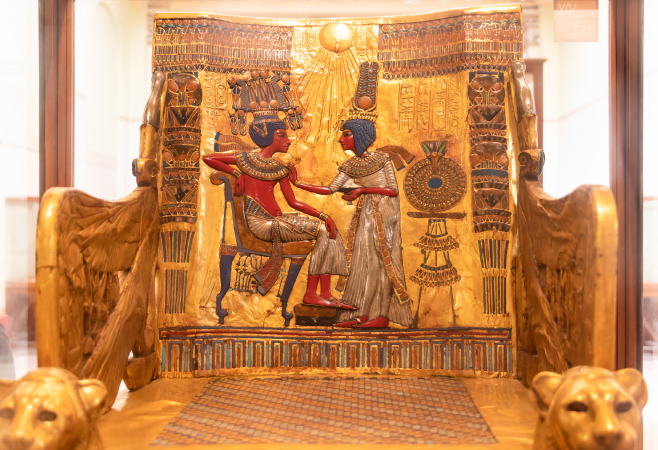
Queen Ankhesenamun was a royalty of the 18th Dynasty and daughter of both the Pharaoh Akhenaten and Nefertiti. She experienced major religious changes in Egypt and was married to her half-brother, Tutankhamun, in a bid to stabilize the kingdom following the Amarna period as a Great Royal Wife.
Politically, Ankhesenamun faced great uncertainty after Tutankhamun’s sudden death following the sudden and premature death of Tutankhamun, she was left without an heir, and she was possibly briefly interested in a foreign prince as her next husband - which was an odd foreign policy step on the part of a queen. The fate that befell her later life and death is a mystery and so she is one of the more mysterious Queens of Egypt whose tale tells a tale of serious challenges of the dynasty.
Queen Ankhesenamun
The influence of Egypt’s royal women can also be seen in monumental complexes like the Karnak Temple in Egypt, which symbolized divine authority and political strength.
Queen Merneith
- Name: Merneith (“Beloved by Neith”)
- Period: First Dynasty (c. 2950 BC)
- Role: Queen, possible early ruler
Queen Merneith was an early and important royal person in ancient Egypt and possibly one of the earliest royal women to exercise ruling authority in ancient Egypt, likely as a regent, serving as a regent or even pharaoh herself at the beginning of the first dynasty.
Her name appears on seal impressions and official administrative records in addition to the royal lineage and this indicates that she had powers that transcended beyond the normal duties of a queen consort.
The fact that Merneith was buried prestigiously in Abydos in a large tomb and grave items indicates her high status. She is said to have led Egypt through the period of transition and left her son to ascend to the throne and made Merneith one of the pillars of the history of the Queen in Egypt.
Queen Nefertari
- Name: Nefertari Meritmut
- Dynasty: 19th Dynasty
- Role: Great Royal Wife
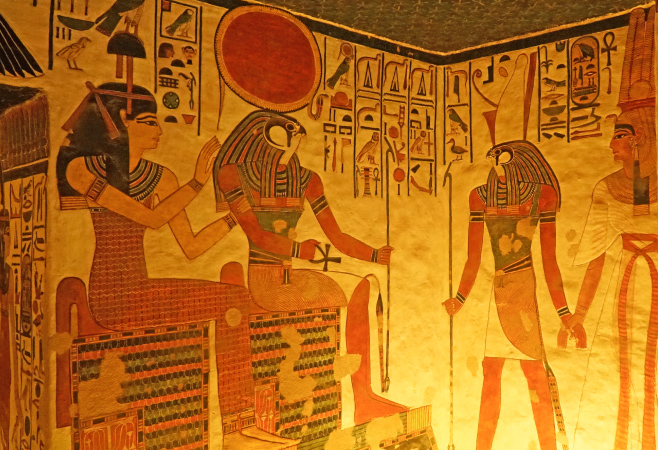
Queen Nefertari was the primary favorite wife to the Pharaoh Ramesses II (Ramesses the Great) and among the most acclaimed queens in Egypt. She was a lady who was given numerous significant titles including Lady of The Two Lands, Mistress of Upper and Lower Egypt, and Beloved of Mut.
Nefertari played an active diplomatic role and appears to have played a diplomatic role, as evidenced by limited but significant royal correspondence due to her highly learned and mastery of hieroglyphic literacy, an uncommon female capability of her time.
Her rich tomb at the Valley of the Queens (QV66) has been one of the most well-decorated that have been discovered and Ramesses II also dedicated a temple in Abu Simbel to her demonstrating her long-term impact and position.
Queen Nefertari
The architectural brilliance of the temple of Hatshepsut reflects the strength and legacy of one of Egypt’s most influential queens.
Queen Neithhotep
- Name: Neithhotep (“Neith is merciful”)
- Period: First Dynasty (c. 3050 BC)
- Role: Queen consort, possible early ruler
Queen Neithhotep was a great figure during the first years of ancient Egypt, who was married to Narmer, who is widely credited with the unification of Upper and Lower Egypt.
Her title and name are inscribed on big mastaba tomb constructions and seal impressions, and her burial was so massive that it portrayed outstanding significance.
According to some Egyptologists, she might have become a regent, or wielded power akin to that of a pharaoh, and is thus one of the earliest strong women of Egyptian history.
No matter how much or how little she was a powerful individual or merely a consort and a counsellor, the heritage that Neithhotep left is a testament to the powerful role that women could assume during the early dynasties of Egypt.
Queen Nitocris
- Name: Nitocris (possibly legendary)
- Period: Sixth Dynasty (c. 2180 BC)
- Role: Queen (historic debate)
Queen Nitocris is a mysterious representative of the late Old Kingdom, Egypt. She is described by ancient authors like Herodotus and Manetho as a great king who took revenge over the killing of her brother and brought justice though there is little archaeological support or controversy.
Even contemporary historians are still in doubt that Nitocris was an historical queen or that this character was an invention of secondary literature.
Regardless of her historical authenticity, the legends portray Nitocris as a figure of wisdom, power, and dramatic leadership, and it remains believed even to date in certain accounts that she was among the first female monarchs in Egyptian legend.
Queen Tiye
- Name: Tiye (also Tiy)
- Dynasty: 18th Dynasty
- Role: Great Royal Wife
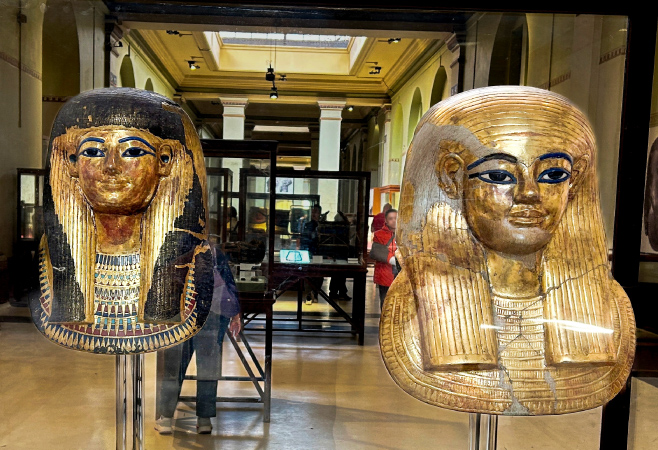
Queen Tiye was the powerful wife of the pharaoh Amenhotep III and a mother of Akhenaten, who became one of the key figures in the political and religious life of Egypt in the apogee of the 18th Dynasty.
Being born to a great non-royal family, she has emerged as an advisor and a diplomatic partner, which strengthened the relations between the country and foreign lands and the inner rulers.
Tiye encouraged the religious changes of her son which promoted the sun god Aten, and played a central role in the politics of the court. The fact that she was mentioned in treaties and had been writing to foreign kings shows that she was an outstanding influence as a Queen of Egypt beyond being a ceremonial figure.
Queen Tiye
Queen Twosret
- Name: Twosret (Tausret, Tawosret)
- Dynasty: 19th Dynasty
- Role: Pharaoh
Queen Twosret became the monarch following the demise of her husband, Pharaoh Seti II, she later became the final ruler of the 19th Dynasty. Her reign was characterized by challenges in politics as she attempted to hold on to power in a male dominated line.
Twosret managed the religious and construction works and tried to strengthen her authority by means of conventional pharaonic titles and monuments. But her reign was terminated with the ascent of Setnakht, the founder of the 20th Dynasty. Still, the leadership of Twosret was one of the few cases when a Queen of Egypt was a pharaoh herself.
FAQs about Queen of Egypt
Below are common questions that help clarify the history, power, and legacy of the Queen of Egypt in ancient civilization.
Who was the first Queen of Egypt?
One of the earliest known royal women with exceptional authority in Egypt was Neithhotep, who lived during the First Dynasty around 3100 BCE. She was likely the wife of King Narmer and may have ruled as a regent after his death. Archaeological evidence, including royal inscriptions and her large tomb, suggests she held exceptional authority for her time.
Who was the last Queen of Egypt?
Cleopatra VII is recognized as the last Queen of Egypt, ruling from 51 to 30 BCE. She was the final active ruler of the Ptolemaic Kingdom before Egypt became a province of the Roman Empire. Her death marked the end of ancient Egyptian sovereignty.
Who was the most powerful queen of Egypt?
Many historians consider Hatshepsut the most powerful Queen of Egypt. She ruled as pharaoh during the 18th Dynasty, governed for over two decades, expanded trade, and commissioned monumental architecture. Her long, stable reign demonstrated unmatched political and economic success.
Did queens rule alone or with kings?
Queens ruled in different ways. Some served as queen consorts, ruling alongside kings or acting as advisors. Others, such as Hatshepsut, Sobekneferu, and Twosret, ruled alone as pharaohs with full royal authority, using kingly titles and symbols.
In conclusion
The history of the Queen of Egypt shows that ancient Egyptian civilization allowed women to exercise genuine political, religious, and royal authority. Since the times of early dynastic leaders up to the dramatic reign of Cleopatra, these queens had their way in shaping the legacy of Egypt in thousands of years. Nowadays, visitors are able to sightsee temples, graves and monuments that are associated with these mythical women and it is easier due to the Egypt e-Visa which allows first hand exploration of ancient royal history.
Related Articles
- Nigeria to Egypt Distance: Flight Time, Routes and Travel Guide
- Egypt Begins Digital Visa on Arrival Pilot at Cairo Airport in August 2026
- Singapore to Egypt Distance, Flight Time & Visa Guide
- Malaysia to Egypt Distance: Complete Travel Guide
- Distance Qatar to Egypt: Flight, Driving & Travel Time Guide
- Qalawun Complex Cairo: History, Architecture & Visitor Tips
- Waterfall Egypt: Complete Guide to Wadi El Rayan, Egypt’s Only Waterfall
- Egypt Tour from Singapore: Best Packages and Travel Tips
- Egypt Holiday Tour Package from Malaysia 2026

 NEED HELP 24/7
 United States
  United Kingdom
  Singapore
  Viber
Viber 


